
The Big Brawl / Battle Creek Brawl (1980)
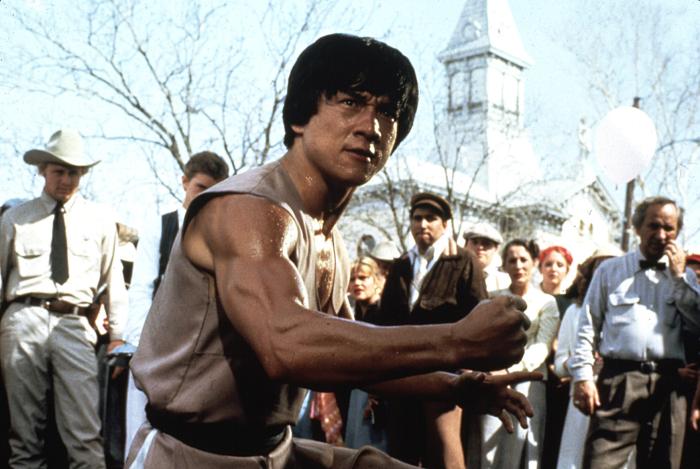
Producer Fred Weintraub and Raymond Chow, the founder of Golden Harvest Pictures, found international success with Bruce Lee in “Enter the Dragon.” Sadly, Bruce passed away before the film was released in 1973. Following his death, the market for martial arts films expanded significantly; however, despite numerous efforts in the years that followed, no one was able to achieve the same level of international popularity as Bruce Lee.
In the late 1970s, a new talent was emerging in Hong Kong: Jackie Chan. He starred in three kung fu films that outperformed all of Bruce Lee’s movies at the Asian box office. Recognizing Jackie’s success, Weintraub saw an opportunity for Jackie to cross over to Hollywood, believing he could achieve the same level of international stardom that Bruce had attained—perhaps even surpass it. While Bruce primarily appealed to adolescent males, Jackie’s trademark humor resonated with children and garnered appreciation from women for his vulnerability and relatability. Older audiences also appreciated his slapstick style, reminiscent of comedic legends such as Charlie Chaplin, Buster Keaton, and Harold Lloyd.
Jackie’s diverse skill set was cultivated over his entire life. When he was seven years old, Jackie’s parents had to relocate to Australia for work, so they enrolled him in a ten-year program at the Peking Opera School in Hong Kong. His father expected that the school would help instill discipline in the often rebellious Jackie. At the school, Jackie trained twelve hours a day in martial arts, acrobatics, and acting. Jackie trained intensively in kung fu, mastering techniques such as punching, kicking, jumping, and using weapons like sticks and swords.
At the age of 17, after completing his opera contract, Jackie continued to train in hapkido, judo, karate, and boxing. He started as a stunt performer and fight coordinator before securing minor acting roles. His impressive talent soon established him as a leading actor in kung fu films, which led to a contract with filmmaker Lo Wei, who’d produced Bruce Lee’s pre-Hollywood works.
In 1978, Wei lent Jackie Chan to Seasonal Films for *Snake in the Eagle’s Shadow* and *Drunken Master*. Both films highlighted his untapped slapstick comedy and stunt skills. The result was phenomenal, with both films achieving greater box office success in Asia than *Jaws*.
When Jackie returned to filmmaking with Lo Wei for *Fearless Hyena II*, he became frustrated with Wei continuing to try to mold him into Bruce Lee. Jackie felt that Wei’s films did not highlight his new style and ultimately failed at the box office. During this period, both Golden Harvest and Shaw Brothers attempted to break Wei’s contract with him. Although Shaw Brothers offered a higher salary, Golden Harvest ultimately succeeded due to its connections in the English-language film market and its promise to support Jackie in achieving stardom in the U.S.
Facing the threat from Wei’s connections with the triads, Jackie took the opportunity to leave Hong Kong. Following the success of *Young Master* with Golden Harvest, Chow signed him to a multi-film deal, supported by the expanding Japanese market.
Golden Harvest closely modeled Jackie Chan’s introduction to America after Bruce Lee’s, with Robert Clouse, the director of Enter the Dragon, at the helm and Warner Bros. handling the distribution in English-speaking countries. Unlike his films in Hong Kong, where Jackie had roles as producer, director, and choreographer, he was limited strictly to acting under his contract for this project. However, it came with a $1 million paycheck—the highest ever for an Asian actor at the time. Jackie’s contract also included participation in a nationwide publicity tour, which featured appearances on American talk shows.
This situation presented a significant challenge because Jackie spoke no English and was scheduled to appear in an all-English film. It would also be the first to feature his voice, unlike previous Hong Kong kung fu movies, which were filmed without sound and later had dialogue added by voice actors. With production set to begin in two weeks, an English tutor was hired. However, teaching proved difficult since Jackie had not received any formal education since he was twelve years old.
The American press immediately labeled Jackie Chan as “the new Bruce Lee.” While Jackie admired Bruce Lee, he was cautious about being viewed as an imitator. He compared it to Clint Eastwood and John Wayne, who each have unique styles within the same genre. Clouse acknowledged that Jackie was more versatile than Bruce, demonstrating emotional depth, acrobatics, martial arts skills, and a sense of humor. However, the American press’s knowledge of martial artists was too limited to see beyond Bruce Lee.
In film, Bruce represents an invincible superman, while Jackie symbolizes a relatable everyman. Bruce is serious and intense, while Jackie is joyful and humorous. Jackie views Bruce as a martial artist, but sees himself as an actor who can also do comedy and drama. He humorously refers to himself as “Dustin Hoffman with fighting skills.” Despite his success, Jackie was growing weary of martial arts films and dreamed of transitioning to dramatic roles, such as one in *Kramer vs. Kramer*, once his English improved.
Set in Chicago in 1938, “Battle Creek Brawl” follows Jerry Kwan, the son of a struggling restaurant owner. Pressured by the local mob for “protection” money, Jerry wishes to defend his family with the martial arts skills taught by his uncle Herbert. Still, his father forbids his son from getting involved in fighting.
In a confrontation with mob henchmen, Jerry’s skillfulness at self-defense attracts the attention of mob boss Domenici, who recruits him for the “Last Man Standing” brawl in Battle Creek, Texas, to help him win a bet against a rival. The event features 18 fighters willing to risk serious injury, and attracts thousands of spectators, both in person and via radio broadcast.
When Jackie read the script for *Battle Creek Brawl*, he raised concerns about its serious tone. He wanted to emphasize his comedic and vulnerable sides rather than being portrayed as a vengeful killer. The producers promised to discuss Jackie’s qualms with Clouse, who favored the successful formula of *Enter the Dragon*.
The company flew Jackie to Los Angeles, where he worked with a private tutor who served as his interpreter during interviews. He improved his English in the evenings by watching American television, especially commercials, which helped him learn common expressions and gain an understanding of American culture. Still, after a week of English lessons, Jackie could only recall basic English phrases for ordering food.
Jackie often visited Chinese restaurants in Los Angeles for authentic food that reminded him of home. Jackie also met friends visiting from Hong Kong who visited attractions like Disneyland and Magic Mountain. While trying to reach the San Diego Zoo, he got lost and was pulled over for erratic driving. Frustrated, he asked, “How do I get home?” Jackie stopped driving on American freeways, finding them overwhelming compared to navigating the smaller streets of Hong Kong. Everything was too big. On the positive side, during his travels around California, Jackie met Taiwanese singer Teresa Teng Li-jun, which led to a romantic relationship.
Filming for “Battle Creek” began in mid-January in San Antonio, which was transformed to resemble Chicago, with climax scenes shot in Floresville. TV crews from Hong Kong followed Jackie during the filming process, while residents, including the high school band, participated as extras. The crew replaced the town signs and brought in vintage cars to match the film’s era.
Jackie continued to feel dwarfed by the sheer size of Texas. Yet, though Texas is over six hundred times larger than Hong Kong, Hong Kong was lonelier, despite its population density. He noted that Texans seem friendlier to strangers than Hong Kong residents are to their neighbors. Jackie found the Chinese restaurants in San Antonio to be far less authentic than those he had discovered in Los Angeles. Disappointed with Americanized Chinese cuisine, he explored traditional American dishes that he knew how to order with his limited English vocabulary, such as pizza, tacos, burgers, fries, ice cream, and Coca-Cola. Ultimately, he settled on thick cuts of steak as his go-to choice while in Texas. Jackie’s unhealthy eating habits caused him to faint at a restaurant. After regaining consciousness, he was encouraged to get a check-up, which revealed dangerously high cholesterol levels. Following a doctor’s warning about health risks, he decided to cut fast food and carbonated drinks from his diet.
Rehearsing his lines required so much focus that he found it difficult to convey emotions while acting. He felt comfortable performing in Cantonese but relied on memorization for English. To help, they used hand signals: one finger for a smile and two fingers for anger. The production company added two more tutors to assist with translation and rehearsing his lines.
For a key roller derby action sequence, Jackie needed to learn roller skating but had no experience. Determined to improve, he practiced at the beach boardwalk for a week. By the film’s end, DeBell, also a beginner, successfully jumped over barrels. Although grueling, Jackie increased his skill set exponentially through his experience in the years to come. Because he’d mastered roller skating, he progressed to skateboarding, barefoot water skiing, and snow sports, while also refining his conversational English.
Jose Ferrer was cast as the mob boss, while Kristine DeBell was chosen as the love interest. After her casting, DeBell suffered a car accident that required stitches near her eye, raising concerns about being replaced. The production team opted to wait for her full recovery before proceeding. Pat Johnson, who plays Carl in the film, served as the stunt coordinator. The production sought 40 professional wrestlers and athletes with acting experience for the main brawl to play the “meanies”, including two-time judo champion Gene LeBell. Ernie Holmes, a former All-Pro defensive lineman for the Pittsburgh Steelers, and H.B. “Hard Boiled” Haggerty, a retired Detroit Lions star turned character actor, were selected for key roles. Haggerty portrayed the homicidal fighter Billy Kiss, while Don Slatton, known as The Lawman, had a non-speaking part. Terry Funk auditioned but was not cast because he was deemed neither ugly nor nasty enough for the role.
Jackie needed to adapt to the American film production style, which typically uses three cameras. In contrast, Hong Kong filmmakers often use just one, requiring actors to repeat scenes for different angles. Jackie noted that collaborating with American stunt performers is challenging due to differing philosophies. In Hong Kong, the focus is on movement, while in the U.S., it’s on fighting techniques. Professional wrestlers can inflict damage, but martial artists pose a greater challenge due to their speed.
They thought that keeping Jackie from deviating from the script would improve the film. However, halfway through production, he became concerned that the movie might not meet the audience’s expectations. Frustrated, he wanted to add ideas he felt were better than those allowed by the director, Clouse. When the Los Angeles production team learned of Jackie’s struggles, they flew to Texas to discuss the situation with Clouse. They emphasized their goal of helping Jackie succeed, rather than merely imitating Bruce. Although Clouse granted Jackie more creative freedom, the tight budget and schedule limited his time to develop the complex action scenes he was accustomed to in Hong Kong.
In Hong Kong, Chan was known for his exceptional fighting techniques. After moving to America, stunt coordinator Pat Johnson suggested adapting his methods to appeal to American audiences. He argued that punches that looked weak would be seen as ineffective, so Jackie learned roundhouse-style punches to enhance his on-screen presence. While real kung fu fights end quickly, action cinema requires longer, more dynamic sequences to satisfy audience expectations.
Additionally, Hollywood stunt performers often lack the training to match Jackie’s agility, limiting their ability to showcase their skills. American stunt performers typically specialize in falls from horses and buildings, while their Hong Kong counterparts are highly skilled in martial arts. In Hollywood, actors often minimize physical contact, whereas in Hong Kong, there is a cultural emphasis on taking hits during performances. Additionally, U.S. union regulations provide protections for stunt performers, whereas in Hong Kong, acknowledging injuries can result in job loss.
Jackie was used to performing and choreographing his stunts, but Johnson had the final say. While Jackie thrived on improvisation to engage audiences, the American approach relied on meticulous planning, which didn’t align with his style. Jackie’s ideas often shocked the crew. One day, he suggested a 50-foot jump into a stack of boxes, but after pushback from Weintraub and Clouse, he settled for a six-foot jump from the first floor. Filming from below made it appear as though the jump was much higher and took less time to set up. Jackie noticed that while American films are more organized, Hollywood’s “time is money” mentality conflicted with his creative style.
In contrast, Hong Kong’s relaxed production schedules allow for more time to refine scenes, a flexibility Jackie felt was missing in Hollywood, leaving him feeling rushed. Jackie thought American movie sets were boring compared to those in Hong Kong because no one spoke his language. In Hong Kong, he was catered to like royalty; in the U.S., he felt like a beggar, largely unacknowledged.
Jackie felt frustrated on set when many of his suggestions were rejected. Accustomed to more creative control in Hong Kong, he had envisioned an elaborate entrance involving a jump, somersault, and backflip. Instead, Director Clouse insisted he get out of the car and walk. Jackie complied but later said, “No one will pay to see Jackie Chan walk!” Clouse replied that, for this movie, they would. Frustrated, Jackie wanted to tell Clouse, “F— you,” and walk off the set. Instead, he calmed down and followed Clouse’s direction, even though he felt it wouldn’t resonate with martial arts audiences. Acknowledging his lack of understanding of American humor, he decided to give Clouse a chance and mentally noted what he couldn’t do for ideas to utilize in future films.
Jackie felt intimidated by Debell’s openness about sexuality during their romantic scenes. DeBell had appeared in Playboy and starred in a softcore version of “Alice in Wonderland.” Jackie noted that romance is rarely included in Hong Kong action films, as their audiences prefer continuous action. While Asian viewers might accept affection in American movies, they disapprove when Jackie kissed a girl on screen, leading to complaints about his scenes with DeBell.
The film contains several anachronisms, such as 1970s-style outfits featured during unnecessary roller derby scenes and Chuck Taylor Converse All-Star sneakers worn by one of the fighters. Additionally, it overlooks the expected segregation of time, including an interracial relationship that goes unnoticed even by the overtly racist characters. However, the film accurately states that roller derby originated in Chicago in the mid-1930s.
After finishing production, Clouse worked on a pirate movie script for Jackie, which went through several title changes: “The Bloodrun,“ “Blood Island,” and “Why Me?“ The script aimed to reunite Jackie with Kristine DeBell and was set to be filmed in England and Hawaii. Chan bought a house in America, expecting a more extended stay and aiming to avoid conflicts with Lo Wei and the Chinese triads over his contract. Despite being young and skilled in martial arts, he recognized the importance of evolving. To ensure his career thrived, he needed to improve his English, acting, writing, and adaptability. Chan aimed to adapt to the U.S. film industry by returning to school, hiring a British tutor, and learning horseback riding and fencing for his role in the pirate film.
Lalo Schifrin, another returnee from Enter the Dragon, composed the catchy score. Schifrin later created the music for Jackie’s “Rush Hour” series.
Golden Harvest presented a 30-minute reel of Jackie’s top fight sequences at the Cannes Film Festival to promote him as a rising star. The title was changed to “The Big Brawl” before its release in some countries, including the United States.
In 1980, America was unprepared for Jackie Chan, and he was equally unprepared for the American media. Despite his colleagues’ advising him to prepare for the reporters, he thought their warnings were unnecessary, believing he didn’t need to worry.
During his nationwide film promotion, Jackie Chan observed that many interviewers struggled to remember his name. They often mistakenly referred to his martial arts skills as karate instead of kung fu and invariably compared him to Bruce Lee. Jackie felt that the American press expected him to perform kung fu on command, as if he were a trained animal. On one occasion, after flying from Los Angeles to New York for a television interview, the situation between him and the host became awkward, and the interview was never aired. The official reason: Jackie’s English wasn’t good enough.
There were occasions when people at press events challenged him to a fight, as he was promoted as a kung fu master rather than simply an entertainer. During an interview, an onlooker asked if his moves would be effective against a real attack. The interviewer’s staff, curious about the situation, did not intervene, which led to a violent confrontation. As the assailant swung at him, Jackie delivered a low kick that knocked the attacker down. This prompted the staff to step in and protect the assailant.
After the interviews, he returned to his hotel room in tears. While everyone in Hong Kong admired him and his work, in America, they seemed to care little about knowing him. Jackie initially enjoyed the anonymity of being in the United States, where he could walk freely without being surrounded by fans. However, loneliness soon took over, and he longed for someone to talk to. When he attended a screening of *The Big Brawl*, he found it depressing to see his film playing in an almost empty theater. With only a few friends in the U.S., he sat in painful silence, surrounded by just a handful of other attendees. Jackie grew unhappy with the movie, citing poor acting, dull dialogue, and awkward fight choreography. Despite the large, muscular appearances of his opponents, their fighting skills were lacking.
Jackie was told that one reason many Americans didn’t appreciate *The Big Brawl* was that his fight scenes often lasted five to ten minutes, with opponents remaining on their feet despite receiving multiple punches and kicks. In contrast, a single kick from Bruce Lee could send someone flying across the room, similar to the way John Wayne’s or Clint Eastwood’s punches would. Although Jackie was capable of delivering powerful strikes, that fighting style didn’t suit him, and he wasn’t focused on achieving overnight success with his films.
Contrary to popular belief, “Battle Creek Brawl” was not a failure. The film recouped its $6 million budget in the U.S. and earned over $25 million internationally. It performed exceptionally well in Japan, Mexico, and France due to effective promotions and a successful publicity tour.
The film moves between Chicago, San Francisco, and Texas, creating a feeling of closeness without clearly defining the locations. While this might be frustrating for some viewers, it’s easy to overlook to enjoy the campy action. With thrilling sequences and a vibrant supporting cast, “Battle Creek Brawl” ultimately becomes an entertaining film, thanks to its exciting moments and humorous silliness.
This film was the first attempt to introduce Jackie Chan to American audiences. Despite some criticism, it holds a special place in my heart. “The Big Brawl” (its title when I saw it) was my first Jackie Chan movie (excluding “Cannonball Run”). It uniquely blends kung fu and slapstick comedy. Before watching this, I was only familiar with martial arts films as revenge stories featuring Bruce Lee and Chuck Norris, or cheesy late-night chop-socky movies with poor dubbing and choreography.
While this may not be Jackie Chan’s most spectacular film, I still find it highly enjoyable. The fight scenes are superior to many U.S. kung-fu movies, though they don’t quite reach the brilliance of his Hong Kong films. I appreciate Jackie’s performance, and I’m amused by the cheesy jokes and quirky adventures. Overall, it’s a fun, lighthearted slapstick action film that I appreciate even more for its absurdity.
The film is considered a disappointment because it did not meet its ambitious revenue targets, particularly in Hong Kong, where interest in a martial arts film aimed at Western audiences was low. While it did not make Jackie Chan a household name in the U.S., it did help establish his popularity in Japan, France, and other countries, allowing his career to evolve into that of an international star, albeit more slowly than expected.
The film’s R rating from the MPAA restricts its audience. Although it shares this rating with “Enter the Dragon,” “Battle Creek Brawl” contains significantly less graphic violence, making it more appealing to younger viewers. If it were released today, it would likely receive a PG-13 rating.
With a memorable score by Lalo Schifrin, “Battle Creek Brawl” is a lighthearted kung fu film that showcases Jackie Chan’s unique blend of action and humor.
Qwipster’s rating: A-
MPAA Rated: R for violence and sensuality (PG-13 by today’s standards)
Running Time: 95 min.
Cast: Jackie Chan, Jose Ferrer, Mako, Ron Max, Kristine DeBell, H.B. Haggerty, David Sheiner, Rosalind Chao, Lenny Montana, Pat E. Johnson, Mary Ellen O’Neal, Chao Li Chi, Joycelyne Lew
Director: Robert Clouse
Screenplay: Robert Clouse